
Colorful Ground — The Basics of Color

Practical Guide

Colorful
Ground

The Basics of Color

How color really works, why it fails in the supply chain, and how to make it controllable — without becoming a scientist.

Fashion color collage
Fashion orange textile
Fashion dark silhouette
01

The Problem We All Recognize

Fashion production complexity

The industry isn't failing because it lacks creativity.

Most color problems in apparel are not caused by a single "mistake." They happen because the limits of approval are under-defined.

If you rely only on visual approval, you rely on a moving target:

  • Different lights
  • Different backgrounds
  • Different observers
  • Different days

This is not a people problem.
It's a definition problem.

"It matched in the lightbox, but failed under the buyer's office light."
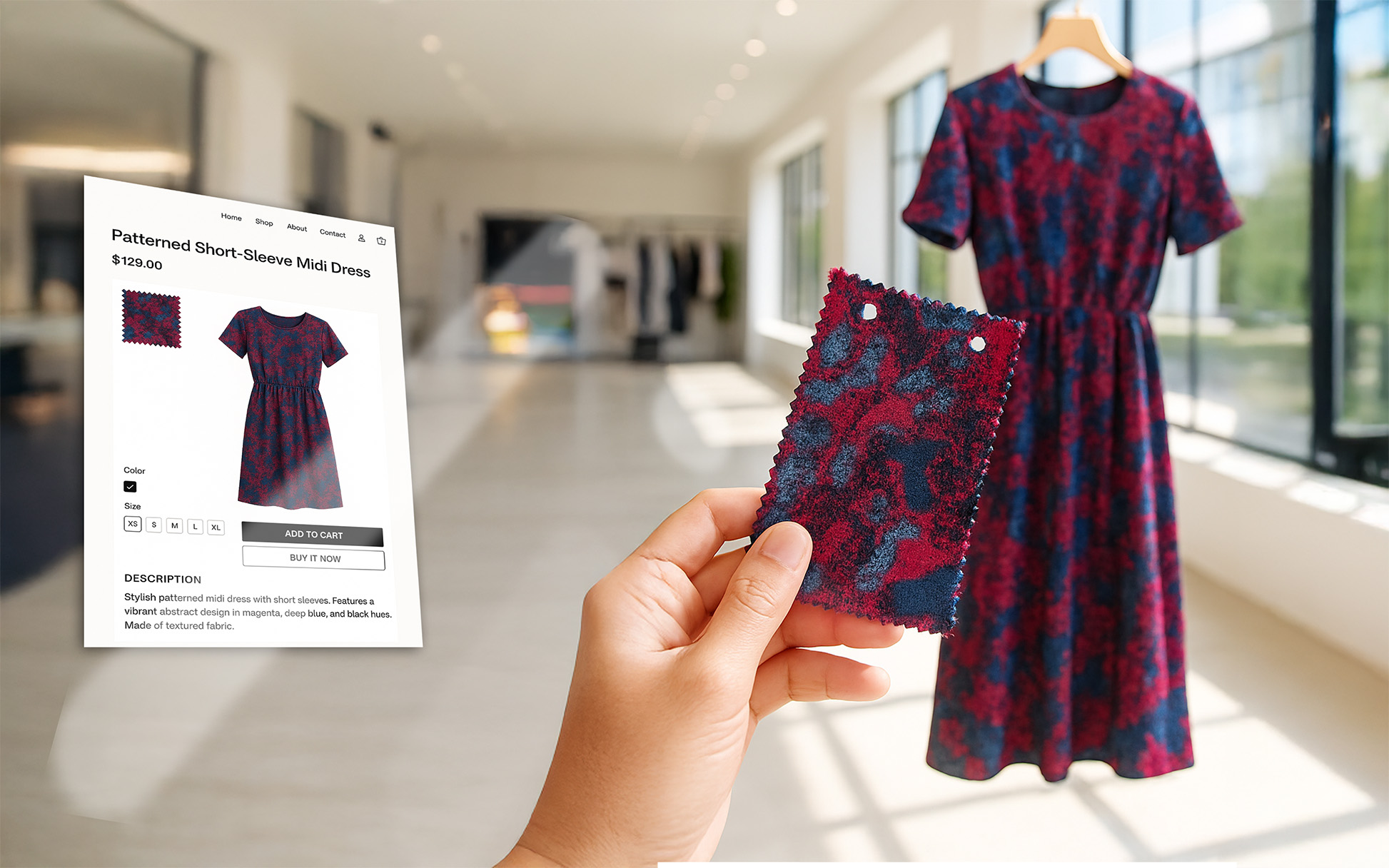
"The e-commerce image looked right, but the garment looks different in-hand."
"Bulk is slightly off, but we can't prove it to the manufacturer."
02

What Is a Color?

Color is not "in the fabric."

A fabric interacts with light — it absorbs some wavelengths and reflects others. Your eye receives that light and your brain interprets it.

Light × Surface × Environment × Observer = Color

Light

Two lights can both look 'white' yet contain very different spectral mixes. Textiles respond to spectrum — not lamp labels.

Surface

Fiber type, yarn structure, dye class, construction, finishing — all influence reflection.

Environment

Color is judged relative to background and surroundings.

Observer

Human vision adapts, corrects, and varies between people.

03

Why Textiles Make Color Harder

Material development in fashion

Texture & Directionality

Rotate fabric → shade shifts.

Gloss & Highlights

Spot lighting can wash out or exaggerate.

Transparency & Layering

Thin knits, coatings, laminations change appearance.

Fluorescence

Optical brighteners shift dramatically between daylight and LED.

Metamerism

Two samples match under one light and mismatch under another.

04

The Human Factor

Designer and engineer communication

Visual approval alone does not scale across a global supply chain.

1

Adaptation

Vision normalizes lighting over time.

2

Context Bias

Same color looks different next to different neighbors.

3

Memory Limits

Humans cannot remember exact colors reliably.

4

Observer Variance

Age, fatigue, sensitivity differences.

Same color, different perception

Both inner squares are identical.

Visual checks confirm appearance — but approvals must be anchored in objective, measurable, shareable references.

05

Defining Color Technically

Every technical process needs a non-interpretable starting point: measurement.

Spectral Measurement

  • Captures reflectance curve — a material's "color fingerprint"
  • Evaluates under multiple illuminants
  • Diagnoses metamerism risk

Image-Based Approaches

  • Useful for speed
  • Sensitive to glare, texture, lighting
  • Must be used within controlled systems
Wavelength (nm) Reflectance

Two reflectance curves — samples that may appear to match under one illuminant

06

Why Color Libraries Don't Solve It

Color libraries create shared language — but don't solve textile reality.

1

A name is a label — not a guarantee across substrates.

2

Physical standards age and vary.

3

Light / environment / observer still apply.

Keep physical standards Pair with measurement Define viewing conditions
07

Color on Screens

🧵

Textile

Reflects light

vs
🖥️

Screen

Emits light

Lab

Comparison & tolerances

RGB + Profile

Device dependent

sRGB

Web standard

CMYK + Profile

Print

Profiles matter. Without calibration, teams approve different realities. Even calibrated screens look wrong in uncontrolled rooms.

08

A Color Process That Works

Design team in material development

A repeatable process turns color into measurable control.

1

Define

Target + conditions + decision rule

2

Develop

On representative material

3

Measure

Early and often

4

Approve

Data + appearance

5

Bulk

Scale with checkpoints

6

Release

Document everything

09

Tolerances

Industrial processes cannot clone perfectly. The goal is controlled variation.

Tolerances convert subjective arguments into predictable decisions.

ΔE Scale

0 — Exact ΔE 1 ΔE 3 ΔE 5+
✓ Accept │ Boundary ✗ Reject

Less rework

Shorter timelines

Fairness across partners

Orange textile in dramatic lighting

10 — Conclusion

Color disagreements
aren't incompetence.

They're contextual.

When teams:

Define conditions Anchor in measurement Set tolerances Document decisions

Color becomes manageable and scalable.

What "Good" Looks Like

If you only do seven things:

Define viewing conditions.
Anchor standards in measurement.
Measure early.
Agree tolerances by risk category.
Standardize digital workflows.
Add checkpoints from lab to bulk.
Document standards and decisions.

Common Failure Modes & Fixes

Problem

"It matched here but not there."

Fix

Define illuminants.

Problem

"It matches lab dip but not garment."

Fix

Approve on representative substrate.

Problem

"Screens don't match."

Fix

Calibrate & standardize profiles.

Problem

"Endless re-dips."

Fix

Define target + tolerances.

Problem

"Bulk drifted though recipe is same."

Fix

Bulk checkpoints + tolerance verification.

Frequently Asked Questions

No. Measurement anchors the decision — visual approval confirms real-world appearance. They complement each other.

Industrial processes cannot produce exact clones. Tolerances define the acceptable range of variation, turning subjective arguments into predictable decisions.

Because it's physically impossible in textile production. Demanding perfection leads to endless rework and delays, not better results.

Photos and screenshots are highly sensitive to camera settings, lighting, and screen calibration. They can mislead more than they help.

Two light sources can appear identically white while having very different spectral compositions. Textiles respond to the spectrum, not the label.

Calibrated screens help — but ambient light, viewing angle, and the fundamental difference between emitted and reflected light mean screens alone are never sufficient.

Glossary

Newsletter SignUp

Stay informed about DMIx!